










The Ultimate Guide to Boosting Your Brand Through Strategic Graphic Design in 2025

Digital Inspired • January 5, 2026

Here's a thought: What if your visual identity isn't just a pretty face for your business? What if it's a genuine growth engine? Businesses with strong, consistent visual branding don't just look good; they typically see up to 23% greater revenue than rivals whose design feels a bit... haphazard. Yet, for many small to medium-sized enterprises (SMEs), crafting that truly cohesive visual identity, one that perfectly captures your business values, can feel like an impossible task. If your visual presence isn't actively driving growth, frankly, you're missing a massive opportunity for boosting your brand in a landscape that's getting more competitive by the minute.

Let's be honest: consumers form first impressions incredibly quickly, often in under a second. And the kicker? A massive 75% of those initial judgments are based solely on design quality. This means your visual identity isn't merely decorative. It's a powerful business asset that directly impacts trust, recognition, and, yes, your all-important conversion rates.

Why Effective Graphic Design Is Essential for Boosting Your Brand

In this crowded digital space, you simply can't afford to blend in. Generic templates and inconsistent visuals won't help you stand out from the crowd. Design-driven companies consistently outperform market averages; data even shows that design leaders achieve 50% more customer loyalty than their competitors. That's huge!

Here's what most businesses miss: many SMEs really struggle with fragmented brand appearances across different platforms. Your website might look incredibly professional, but if your social media graphics and mobile experience don't quite match up, you're pretty much undermining your own credibility. And confusing potential customers. This disconnected approach not only wastes marketing budget but also dilutes your message.

At Digital Inspired , we've helped countless businesses transform their visual identity. We're talking from confused to absolutely compelling, driving measurable growth through strategic design that speaks directly to their target audience. It works.

Step-by-Step Guide to Boosting Your Brand with Strategic Design

Ready to level up? Let's break down the exact process for transforming your brand's visual identity using proven boosting strategies that deliver real results. These actionable steps will empower you to create a design system that genuinely reflects your business values and truly resonates with your ideal customers.

Step 1: Conduct a Visual Brand Audit

Before you can make smart improvements, you first need to understand where you stand right now. Start by gathering all your current visual assets and evaluating them objectively:

  1. Collect every brand touchpoint you can think of - your website, social media profiles, business cards, packaging, email templates, and even mobile app interfaces.
  2. Assess consistency across all those platforms. Do your colours, typography, imagery style, and logo usage stay consistent everywhere?
  3. Identify design elements that are performing well. What's generating engagement, positive comments, or conversions?
  4. Note exactly where visual disconnects are happening in the customer journey.

This audit is a revelation; it'll clearly show you the gaps between your current visual identity and your brand aspirations. For example, a financial services firm we worked with discovered their social media graphics used completely different colours and typography than their website. The result? A fragmented brand experience that really undermined their credibility.

Step 2: Define Your Visual Strategy

Once your audit is complete, it's time to build a strategic framework for your visual identity, one that perfectly aligns with your business goals:

  1. Define your brand personality using just 3-5 adjectives. Are you innovative, trustworthy, approachable? Get specific.
  2. Identify your audience's visual preferences. Take a look at your competitors and other brands your customers admire.
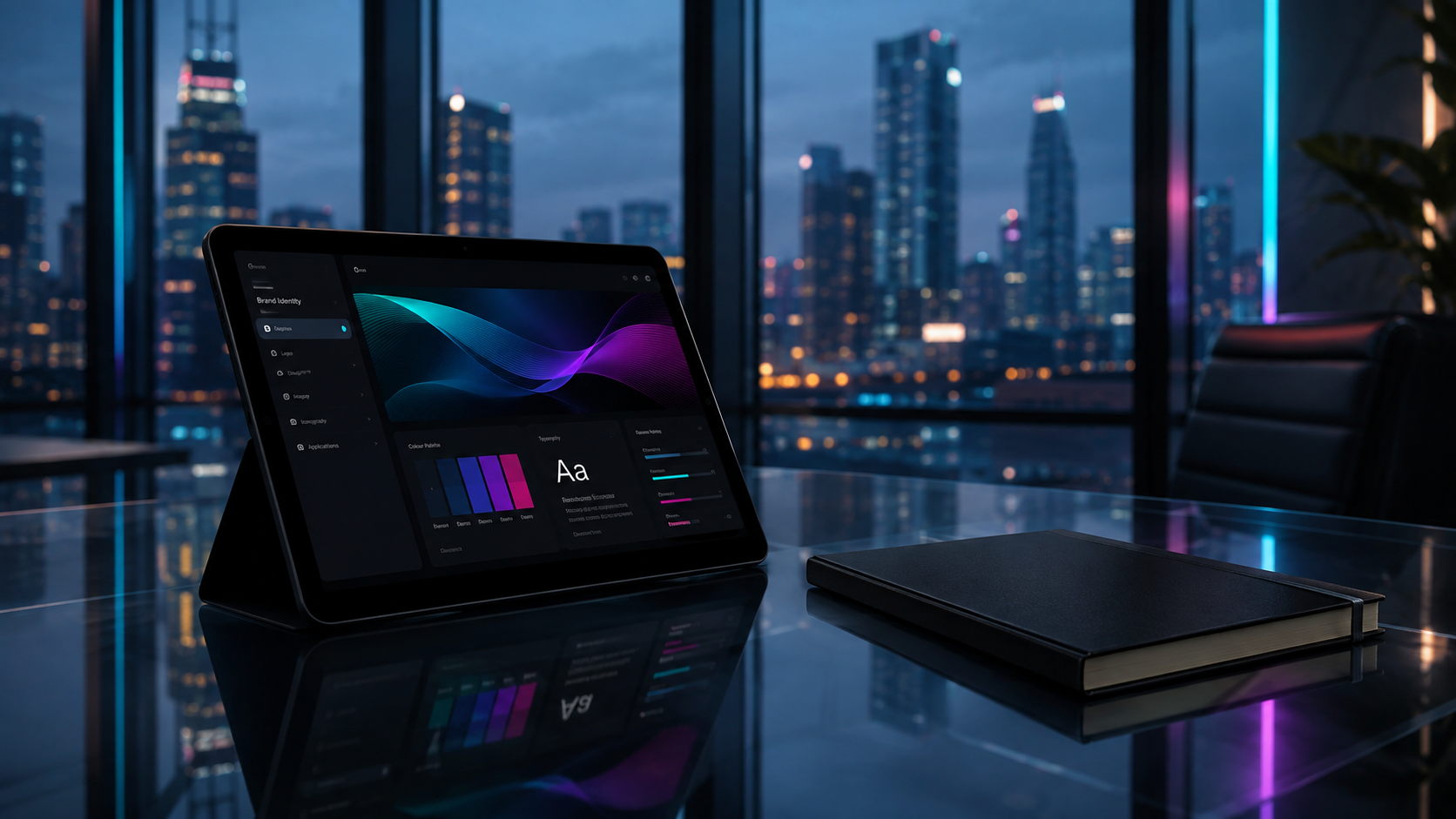
  3. Select a primary colour palette (3-5 colours) that reflects your brand personality and helps you stand out.
  4. Choose 2-3 consistent typography styles - one for headers, one for body text. Maybe a third for accents.
  5. Establish clear imagery guidelines. What's your photography style? What about illustration or iconography?

The key to effective boosting techniques is ensuring every single design choice actively supports your business objectives. A hospitality client we partnered with used warm, vibrant colours and lifestyle photography that showed genuine guest experiences. This created an emotional connection with potential customers, directly increasing their bookings by an impressive 28%.

Step 3: Develop a Comprehensive Design System

Now, we're ready to create a flexible yet consistent design framework that can adapt across all your platforms:

  1. Create master templates for your key marketing materials - social posts, email headers, website banners.
  2. Define clear usage rules for your logo, including minimum sizes and clear space requirements.
  3. Establish a go-to library of approved images, icons, and graphic elements.
  4. Document your colour codes (HEX, RGB, CMYK) for both digital and print applications.
  5. Crucially, create mobile-first design templates to ensure consistency across all devices.

A design system isn't just for big enterprises. Actually, it's even more critical for SMEs who often have limited resources. With a well-documented system in place, you'll save precious time and money while maintaining professional quality across every touchpoint.

What's interesting is that our eCommerce clients who implement comprehensive design systems see an average 65% reduction in design production time. Plus, they get significant improvements in conversion rates as customers experience a seamless journey from social media right through to their website and checkout.

Step 4: Prioritise Digital Touchpoints for Maximum Impact

For most SMEs, trying to redesign everything all at once just isn't practical. Instead, focus your boosting strategies on high-impact touchpoints first:

  1. Your website homepage and key landing pages - these make those critical first impressions.
  2. Social media profile images and post templates - this is where most new customers discover your brand.
  3. Email templates - direct communication channels that directly influence purchase decisions.
  4. Your mobile app interface (if you have one) - increasingly, this is the primary way customers interact with businesses.

By prioritising these elements, you'll get the biggest return on your design investment. For instance, a property management firm we worked with saw a 34% increase in qualified leads within just three months, simply by redesigning their website homepage and creating consistent social media templates.

Step 5: Implement and Measure Your Design Impact

The best boosting tips always include measuring your results to validate your design decisions:

  1. Establish baseline metrics before implementing any new designs (think website traffic, conversion rates, social engagement).
  2. Implement design changes systematically, perhaps focusing on one platform at a time.
  3. Track performance changes after each implementation. A/B test when you can - it's invaluable.
  4. Gather customer feedback on new visual elements through quick surveys or direct outreach.
  5. Refine your designs based on that performance data and feedback.

This data-driven approach ensures your design investments deliver tangible business results. Take an accounting firm we partnered with: when they redesigned their service pages with a clearer visual hierarchy and more strategic call-to-action placement, they saw consultation requests increase by a whopping 46%.

Best Boosting Practices for Specific Business Sectors

Different industries often require tailored approaches to visual design for maximum impact. It just makes sense, doesn't it?

For eCommerce Businesses

Focus relentlessly on creating consistent product photography styles, mobile-optimised product pages, and a super streamlined visual checkout process. Did you know visual consistency across product categories can increase average order value by up to 18%?

For Professional Services (Legal, Finance, Accounting)

Prioritise sophisticated, trust-building design elements with a crystal-clear information hierarchy. Use subtle animation and interactive elements to make complex information more digestible, all while maintaining that crucial air of professionalism.

For Hospitality and Events

Here, it's all about leveraging immersive imagery, compelling video content, and emotional design elements that help prospects truly visualise their experiences. Virtual tours and consistent visual storytelling across platforms can dramatically boost conversion rates. Seriously dramatic boosts.

The key to successful sector-specific design is understanding audience expectations while still creating clear visual differentiation from your competitors. Our portfolio beautifully demonstrates how we've helped businesses across various sectors develop distinctive, yet always appropriate, visual identities.

Advanced Boosting Guide: Beyond the Basics

Once you've established your core visual identity, consider these advanced boosting techniques to really elevate your brand even further:

  • Motion and animation - Subtle animations on your website or in social media content can increase engagement by up to 80%. That's a huge lift!
  • Custom illustration systems - Unique illustrations create memorable brand moments that stock photography simply cannot match.
  • Interactive elements - Calculators, quizzes, and other interactive tools, all wrapped in your brand design, significantly increase time on site and lead generation.
  • Personalised visual experiences - Tailoring visual elements based on customer data creates more relevant and impactful connections.

A beauty brand we worked with implemented a custom illustration system that specifically highlighted their natural ingredients. This created a distinct visual language that truly helped them stand out in an incredibly oversaturated market. This visual differentiation contributed to a 42% year-on-year growth in direct-to-consumer sales. Powerful stuff.

Common Pitfalls When Boosting Your Brand

As you implement your visual identity improvement plan, make sure you watch out for these common mistakes:

  • Trendy over timeless - Chasing every new design trend, rather than developing a sustainable visual system, just leads to frequent, costly updates.
  • Desktop-only focus - Failing to prioritise mobile experiences basically ignores how most customers interact with your brand today.
  • Visual overload - Using too many design elements creates confusion rather than clarity. Keep it clean.
  • Inconsistent application - Allowing exceptions to your visual system totally undermines recognition and trust.

These pitfalls often stem from viewing design as merely decorative, rather than strategic. But here's the thing: by treating visual identity as a core business asset with measurable impact, you'll make far more effective decisions that genuinely support long-term growth.

According to research by McKinsey , companies with strong design actually outperform their industry benchmark revenue growth by as much as two-to-one. This isn't coincidental; it's the direct result of strategic visual communication that truly resonates with customers.

Takeaways: Your Roadmap for Boosting Your Brand

The path to a stronger visual identity isn't about making a few cosmetic changes; it's about creating a cohesive system that communicates your unique value across every single customer touchpoint. By following this guide, you can absolutely transform your brand's visual presence from a potential weakness into a powerful competitive advantage.

Remember that effective design is measurable - always track improvements in key metrics like website conversions, social engagement, and customer retention to validate your approach. The businesses that treat design as a strategic investment, rather than just an expense, consistently outperform their competitors. No surprises there.

At Digital Inspired, we specialise in helping SMEs develop visual identities that genuinely connect with their audiences and drive real business growth. Our collaborative approach ensures your unique values shine through in every design element we create.

Ready to transform your brand's visual identity into a powerful business asset? Let's talk about how we can help you create a distinctive, consistent visual presence that resonates with your ideal customers and drives measurable growth.

By Digital Inspired December 29, 2025
Discover how future-proofing SME digital solutions can help your business thrive in 2025 and beyond. Learn strategies for sustainable growth in a rapidly evolving digital landscape.
By Digital Inspired December 22, 2025
Discover 7 practical strategies from SME digital success stories that drive measurable business growth. From implementation to ROI - your path to digital transformation.
By Digital Inspired December 15, 2025
Discover how exceptional digital design for SMEs delivers measurable ROI, builds credibility, and transforms customer experiences. Elevate your brand with strategic design.
By Digital Inspired December 8, 2025
Discover how SMEs can leverage 4 breakthrough digital growth trends in 2025, from AI-powered automation to immersive experiences, with robust digital growth solutions.
By Digital Inspired November 27, 2025
Is your website turning away potential customers instead of converting them? You're not alone. In 2025, 67% of SMEs struggle with digital products that fail to deliver real business results, despite having an online presence. For small and medium enterprises, the difference between surviving and thriving increasingly depends on the quality of your digital experience. It's no longer enough to simply exist online - your digital presence must actively work to attract customers and drive growth. At Digital Inspired, we've helped hundreds of businesses transform their digital presence into powerful growth engines. Here's our step-by-step guide to creating an SME digital experience that genuinely connects with customers and delivers measurable results. 1. Start With a Customer-First Strategy The most common mistake SMEs make is designing their digital presence around what they want to say rather than what their customers need. Begin by thoroughly understanding your customers' journey, pain points, and what they're really looking for when they interact with businesses like yours. Create detailed customer personas that capture not just demographics but also digital behaviours, preferences, and frustrations. What devices do they use? When are they most likely to search for your services? What problems are they trying to solve? This foundation ensures every design decision, content piece, and feature serves a real customer need rather than an internal preference. Your digital experience should solve problems for users, not create new ones. 2. Design an Intuitive User Journey Your website or app should guide visitors naturally toward their goals, whether that's making a purchase, booking a service, or finding information. Map out the entire user journey from first touch to conversion, identifying potential roadblocks and opportunities to delight. Key elements of an intuitive journey include: Clear, prominent calls-to-action that stand out visually Logical information architecture that mirrors how customers think Streamlined navigation with descriptive labels Simplified forms with only essential fields Visible contact information and support options Remember that confusion leads to abandonment. Every click should move users confidently toward their destination without requiring them to think about what to do next. 3. Prioritise Mobile-First Design In 2025, mobile traffic accounts for over 65% of web visits for most SMEs. Yet many businesses still design primarily for desktop, treating mobile as an afterthought. This approach severely limits your growth potential. Mobile-first design means beginning your design process with the mobile experience, then expanding to larger screens. This approach ensures your core functions work flawlessly on smaller devices, where most customers will encounter your brand. Focus on touch-friendly interfaces with appropriately sized buttons, simplified menus, and content prioritised for smaller screens. Ensure load times are lightning-fast - each second of delay on mobile increases bounce rates by 20%. The mobile apps we create follow these principles, resulting in engagement rates 3x higher than industry averages. 4. Create Content That Converts Your digital content should actively work to move customers through your sales funnel, not just fill space. Each piece of content needs a clear purpose aligned with a specific stage of the customer journey. For SME digital experiences, conversion-focused content includes: Benefit-driven headlines that speak directly to customer needs Concise, scannable text with bulleted lists and subheadings Social proof elements like testimonials, reviews, and case studies Visual content that demonstrates your product or service in action Clear next steps that guide users toward conversion Remember that your website visitors typically scan rather than read in detail. Make your key messages stand out visually and ensure they communicate value quickly. 5. Build in Personalisation Capabilities Personalisation has become essential for SME digital experience, with businesses implementing tailored content seeing conversion rates increase by up to 30%. Even with limited resources, you can incorporate simple personalisation strategies that make a significant impact. Start with these achievable personalisation tactics: Segment email communications based on previous interactions Display relevant product recommendations based on browsing history Tailor landing pages for different traffic sources Implement geolocation features to show local information Use cookies to welcome returning visitors differently As your digital maturity grows, you can implement more sophisticated personalisation through customer data platforms that create truly individualised experiences at scale. 6. Implement Analytics and Continuous Improvement A truly effective SME digital experience isn't static - it evolves based on real user data and behaviour. Implement comprehensive analytics that go beyond basic traffic metrics to understand how users actually interact with your digital products. Focus on these key performance indicators: Conversion rate by traffic source and device User flow and drop-off points in key journeys Engagement metrics (time on page, scroll depth, interactions) Form completion rates and abandonment points Return visitor rate and customer retention Use these insights to make regular, incremental improvements to your website or app. Even small optimisations can compound to create significant growth over time. 7. Connect All Digital Touchpoints Your customers don't experience your brand in silos - they move between your website, social media, email communications, and perhaps your mobile app. These touchpoints must work together to create a cohesive customer experience. Audit all your digital channels to ensure consistent messaging, visual identity, and user experience. Information captured in one channel should be accessible in others to create a seamless journey. Consider implementing these connected experience elements: Single sign-on across all digital properties Consistent product information across channels Shared customer service history between platforms Cross-platform notification systems Unified analytics to track cross-channel journeys This connected approach ensures customers receive consistent value regardless of how they choose to engage with your business. Transform Your Digital Presence for Meaningful Growth Creating an exceptional SME digital experience isn't about chasing trends or implementing flashy features. It's about thoroughly understanding your customers and building digital products that genuinely meet their needs while driving your business goals. The most successful SMEs approach digital experience as an ongoing programme of improvement rather than a one-time project. Each refinement brings you closer to a digital presence that not only attracts customers but converts and retains them. At Digital Inspired, we specialise in creating websites and mobile apps that don't just look good - they deliver measurable business results through thoughtful user journey optimisation, compelling design, and strategic functionality. Ready to transform your digital presence into a powerful growth engine? Let's talk about how we can collaborate to create digital experiences that truly represent your brand and connect with your ideal customers.
By Priyesh Vaghjiani November 25, 2025
Your website is often the first place customers interact with your brand, which means it plays a crucial role in shaping how they see your business. When your design, messaging and visuals work together cohesively, they help build trust, recognition and loyalty. But when your website feels disconnected from your brand identity, it can confuse visitors and weaken the impact of your marketing efforts. Here’s how to ensure your website reflects your brand accurately and consistently. 1. Start With Clear Brand Foundations Before diving into website design, it’s essential to have your brand identity clearly defined. This includes your brand values, mission, personality, tone of voice and visual guidelines. If any of these are unclear, your website may end up feeling inconsistent or directionless. A strong brand foundation ensures that every design decision—colour, layout, photography or copy—supports a unified message. 2. Use Consistent Visual Elements Visual consistency is one of the quickest ways to strengthen brand identity. This includes using the same: Colour palette Typography Logo variations Icon styles Photography or illustration style These elements should be applied consistently across your website to create a seamless and recognisable brand experience. For example, a luxury brand might use elegant typography, a muted colour palette and sophisticated imagery, whilst a fun, youthful brand might lean towards bold colours and playful graphics. 3. Reflect Your Brand Personality in Your Layout Your website layout can communicate just as much about your brand as your colours and fonts. A minimalist design gives a modern, professional feel, whereas a more vibrant layout can make your brand appear energetic and creative. Consider what your brand stands for and choose a structure that mirrors that personality. Clean, simple layouts are ideal for brands focused on clarity and professionalism, while more dynamic layouts may suit lifestyle or creative brands. 4. Align Your Tone of Voice With Your Audience Brand identity isn’t just visual—it’s verbal too. The language you use on your website should align with your brand personality and speak directly to your audience. A financial firm might use a formal, authoritative tone, whereas a boutique bakery might adopt a warm, friendly voice. Consistent messaging across headings, product descriptions and calls to action helps build familiarity and strengthens brand trust. 5. Use Authentic, On-Brand Imagery Stock photos can work in some cases, but overused or generic images can dilute your brand identity. Where possible, use high-quality, original photography or custom illustrations that match your visual style and brand personality. This makes your website feel more genuine and memorable. 6. Ensure Your User Experience Reflects Your Values If your brand values simplicity, your site should be easy to navigate. If you champion innovation, users should experience fresh, modern interactions. User experience (UX) is a direct reflection of your brand—so every interaction should echo your core values. Ready to Build a Website That Truly Represents Your Brand? Aligning your website with your brand identity isn’t just a design choice—it’s a powerful strategy that boosts recognition, trust and conversions. At Digital Inspired , we specialise in creating websites that bring your brand to life online and connect with your audience from the moment they land on your page. Discover how we can elevate your brand at Digital Inspired and book your free consultation today.
By Priyesh Vaghjiani October 17, 2025
In an age where anyone can create a website with a drag-and-drop tool, it’s easy to wonder whether investing in professional web design is really worth it. DIY platforms like Wix and Squarespace make it seem quick and affordable—but when it comes to long-term return on investment, there’s a clear difference between a site you build yourself and one crafted by experts. Here’s a closer look at how professional web design compares to DIY builders in terms of performance, conversions and business growth. 1. First Impressions and Brand Credibility DIY websites often rely on generic templates that hundreds of other businesses also use. While they can look tidy, they rarely capture your brand identity or communicate professionalism at a high level. A custom-designed website, on the other hand, is built around your message, tone and audience—instantly setting you apart and helping build trust. Customers judge a business in seconds, and a polished, bespoke website signals credibility and legitimacy right away. 2. Optimised for Conversions DIY sites tend to focus on how things look rather than how they perform. Without expert guidance, calls to action can be unclear, navigation confusing and page layout ineffective. A professionally designed site considers user experience from the ground up: Clear conversion paths Strategic placement of CTAs Mobile optimisation Accessibility compliance Faster load speeds These elements directly affect enquiries, sales and bookings—making a tangible difference to your ROI. 3. SEO and Visibility Search engines reward websites that are technically sound, mobile-friendly and fast. DIY builders offer basic SEO tools, but rarely provide the structure needed to rank competitively. Professional designers build with search performance in mind, setting up clean code, optimised pages and correct metadata—all of which help your business appear higher on Google and attract more organic traffic without relying on paid ads. 4. Long-Term Value vs. Short-Term Savings DIY sites may seem cheaper at first, but limitations soon appear: Hidden subscription costs Limited design flexibility Restricted functionality Poor scalability Extra fees for plugins or e-commerce features Professional design is an investment that pays for itself through better performance, higher conversions and long-term adaptability. Instead of outgrowing your site within a year, you get a platform built to grow with your business. 5. Support, Strategy and Peace of Mind With DIY builders, you’re responsible for everything—security updates, troubleshooting, layout changes and compliance. That takes time away from running your business. When you work with a web design agency, you gain strategic support, ongoing maintenance and expert insight into what works online—giving you both confidence and time back. So, What’s the Real ROI? A website built by professionals isn’t just a prettier version of a DIY template—it’s a sales tool engineered to convert visitors, build trust and support growth. While DIY options may suit hobbyists or startups testing an idea, businesses that want to scale see better profitability and long-term gains with expert design. At Digital Inspired , we specialise in websites that deliver measurable results—not just surface-level design. If you’re ready to turn your website into a high-performing business asset, we’re here to help. Explore how we can elevate your online presence at Digital Inspired and book a free consultation today .
By Priyesh Vaghjiani September 25, 2025
Your website is more than just a place to showcase your business—it’s your most powerful sales tool. Whether you run a local shop, a professional service, or a growing e-commerce brand, your website is often the very first interaction potential customers have with you. And as we all know, first impressions count. At Digital Inspired, we’ve helped businesses of all sizes transform their websites into conversion-driven platforms. Here’s why your website should be working harder than any member of your sales team. It Works Around the Clock Unlike a physical shop or an office, your website never closes. It’s live 24/7, ready to welcome visitors, answer questions, and capture leads while you sleep. A well-designed website gives potential customers everything they need—product details, testimonials, pricing, and ways to get in touch—at the exact moment they’re looking for it. It Builds Trust Instantly People make snap judgements online. Research shows it takes just a few seconds for visitors to decide whether they trust your site. Clean design, professional branding, and clear messaging all contribute to that trust. Add in case studies, client reviews, and security badges, and you’ll quickly reassure hesitant visitors that your business is reliable. It Guides Visitors Towards Action A great website doesn’t just provide information—it encourages action. From booking a consultation to making a purchase, every page should guide visitors towards the next step in their journey. Effective calls to action (CTAs), strategically placed throughout the site, act like a virtual salesperson, nudging prospects closer to conversion. It Strengthens Your Brand Identity Your website is your digital shop window. Every colour, font, and image contributes to the way your brand is perceived. A strong, consistent design ensures that your business looks professional and memorable, helping you stand out from competitors. It Provides Measurable Results Unlike traditional marketing, where it’s hard to track exactly what’s working, your website gives you data you can use. Analytics tools reveal how people find your site, where they spend the most time, and where they drop off. This insight allows you to refine your strategy and continuously improve your results. Is Your Website Selling for You? The truth is, a website that isn’t optimised for conversions is a missed opportunity. It could mean potential customers are slipping away to competitors who have invested in better design and user experience. At Digital Inspired, we don’t just design websites that look good—we build sites that deliver measurable business results. From sleek, responsive designs to conversion-focused strategies, our goal is to make your website your strongest sales asset. Ready to turn your website into your best-performing salesperson? Visit Digital Inspired today and book a free consultation with our team.
By Priyesh Vaghjiani August 20, 2025
Your website is often the first impression potential customers have of your business. No matter how good your product or service is, poor design choices can send visitors clicking away instead of converting into leads or sales. At Digital Inspired , we’ve seen firsthand how subtle design tweaks can dramatically improve performance. Below are ten common website design mistakes that may be costing you conversions—and how to fix them. 1. Slow Loading Times If your site takes longer than three seconds to load, most users will leave. Bloated images, unnecessary scripts, and cheap hosting are often the culprits. Speed optimization should be a top priority. 2. Cluttered Layouts Too much text, too many buttons, or distracting pop-ups overwhelm visitors. A clean, well-structured design guides the eye and keeps the focus on what matters: your offer. 3. Poor Mobile Experience Over 60% of web traffic now comes from mobile devices. If your site isn’t responsive or easy to use on smaller screens, you’re losing a huge portion of your audience. 4. Weak Calls to Action (CTAs) If visitors don’t know what to do next, they’ll leave. A strong CTA—like “Get Your Free Quote Today”—should be clear, visible, and action-oriented. 5. Confusing Navigation If users can’t find what they need within a few clicks, they’ll bounce. Keep menus simple and intuitive with clear labels and a logical hierarchy. 6. Overusing Stock Photos Generic stock images make your brand feel impersonal. Whenever possible, use authentic photography or custom graphics that reflect your business. 7. Lack of Trust Signals No testimonials, case studies, or security badges? Visitors need reassurance. Adding these elements builds credibility and increases conversions. 8. Ignoring Accessibility If your site isn’t accessible to people with disabilities, you’re excluding potential customers and risking legal issues. Good design is inclusive design. 9. Walls of Text Long paragraphs scare users away. Break content into short sections with headlines, bullet points, and visuals to keep readers engaged. 10. No Clear Value Proposition If visitors can’t quickly understand who you are, what you do, and why it matters to them, they’ll move on. Your homepage should communicate your value instantly. The Bottom Line A well-designed website isn’t just about looking good—it’s about guiding visitors toward action. By avoiding these common mistakes, you’ll create a smoother, more persuasive user experience that leads to more conversions. At Digital Inspired , we specialize in designing websites that don’t just impress—they perform. Whether you need a full redesign or a few strategic tweaks, our team can help turn your website into your best sales tool.  Ready to stop losing conversions? Contact Digital Inspired today for a free consultation and discover how we can transform your website into a high-converting asset.
By Admin June 24, 2025
Artificial Intelligence (AI) is no longer a buzzword—it’s the backbone of innovation in web and mobile app development. In 2025, AI has moved far beyond experimental; it's embedded into every stage of the digital product lifecycle, from design and development to testing, personalisation, and post-launch optimisation. For modern agencies and startups alike, understanding how AI is reshaping the landscape is essential to staying competitive. Here’s a look at the most impactful ways AI is transforming web and mobile app development this year. Faster Prototyping and Design AI-powered tools like Figma AI, Uizard, and Framer allow developers and designers to generate wireframes, layouts, and entire user interfaces from simple text prompts. What used to take days can now be done in hours. Agencies can quickly produce interactive prototypes, reducing client feedback loops and accelerating time-to-market. Smarter Coding with AI Assistance Coding is being revolutionized by tools like GitHub Copilot and CodeWhisperer. These AI assistants help developers write code faster and with fewer errors, offering real-time suggestions, auto-completing functions, and even spotting security vulnerabilities. This is especially valuable for agencies juggling multiple tech stacks or tight project timelines. Automated Testing and QA Testing is a major bottleneck in most development workflows. AI now enables automated test case generation, bug detection, and regression testing. Tools like Testim and Functionize use machine learning to adapt to app changes over time—reducing manual QA effort and ensuring more reliable releases. Hyper-Personalised User Experiences AI lets apps dynamically adjust to user behavior. From personalised content recommendations to AI-driven UX adjustments, applications can now “learn” how users interact and tailor their experiences accordingly. This level of personalisation boosts engagement, retention, and overall user satisfaction. Natural Language Interfaces Voice and text-based AI interfaces are becoming standard. Whether through ChatGPT integrations or custom NLP models, apps can now offer conversational experiences—ideal for customer support, onboarding, or guiding users through complex workflows. This also expands accessibility for users with varying needs. Enhanced Data Insights Web and mobile apps generate a goldmine of user data. AI tools like Mixpanel with predictive analytics and Hotjar with AI heatmaps help teams understand user behavior, identify friction points, and prioritize improvements. Decisions are no longer guesswork—they’re data-driven and AI-informed. Final Thoughts  In 2025, AI is not replacing developers or designers—it’s empowering them. The best agencies aren't just using AI tools; they’re integrating AI thinking into every aspect of their workflows. As client expectations rise and competition intensifies, the agencies that embrace AI-driven development will lead the pack. The future of web and mobile app development is intelligent, adaptive, and deeply collaborative—and it’s happening now, contact Digital Inspired for more information.
More Posts